Palm Oil, Pixels, and Patient Data: The Thesis Trends Redefining Indonesian Campus Research
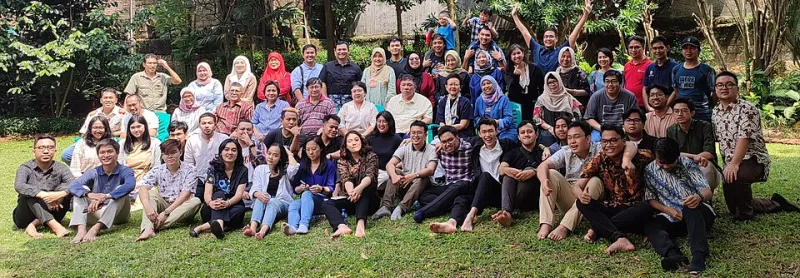
Photo: Jeromi Mikhael, CC0, via Wikimedia Commons
American academics who want a preview of tomorrow's policy debates could do worse than to read the thesis abstracts coming out of Indonesia today. With more than 3,000 higher education institutions and one of the world's largest cohorts of university students, Indonesia functions as an enormous distributed research lab — and the questions its students are asking are increasingly the same questions consuming Washington, Brussels, and Silicon Valley.
We reviewed recent thesis topics, student journal issues, and faculty interviews across several Indonesian universities. Five themes stand out.
1. Palm Oil Alternatives and Second-Generation Biofuels
No crop is more contested in Indonesia than oil palm, and no thesis topic is more timely. Student research at agricultural faculties in Bogor and Samarinda is moving beyond the familiar deforestation critique toward alternatives: algae-based feedstocks, certified sustainable supply chains, and smallholder replanting economics. One recurring finding across multiple student theses: smallholder farmers bear the compliance costs of sustainability certification while capturing few of its premiums.
Why it matters in the US: American renewable fuel standards, airline decarbonization mandates, and the sustainable aviation fuel boom all depend on feedstock supply chains that increasingly run through Southeast Asia. Understanding who actually pays for "sustainable" palm oil is directly relevant to how US regulators design import criteria.
2. Digital Democracy and Disinformation Resilience
Indonesia runs one of the world's largest single-day elections — and its student political scientists are studying how campaign misinformation moves through WhatsApp and TikTok with a granularity that US researchers can rarely match. Recent theses from Universitas Gadjah Mada and elsewhere have tracked fact-checking uptake among first-time voters and tested which correction formats actually stick.
Why it matters in the US: American debates about platform accountability often proceed with thin evidence from non-Western contexts. Indonesian student work on messaging-app rumor cascades offers comparative data points for US researchers studying the same dynamics on Discord, Telegram, and group texts.
3. Halal Supply Chains as a Traceability Problem
Food science and engineering students are treating halal certification as a blockchain and IoT traceability challenge — building prototypes for tracking meat, cosmetics, and pharmaceutical ingredients from source to shelf.
Why it matters in the US: With a growing domestic halal market and expanding US exports to Muslim-majority countries, American food and pharma companies face certification regimes they frequently do not understand. The engineering students solving traceability in Surabaya are, functionally, solving it for global supply chains.
4. Health Data Privacy Under a New Law
Indonesia's Personal Data Protection Law, passed in 2022, is generating a wave of legal and public health theses examining how hospitals, telemedicine apps, and insurers handle patient data in a newly regulated environment. Because enforcement is still maturing, student researchers are documenting real-world compliance gaps as they emerge.
Why it matters in the US: America's fragmented, sector-specific privacy regime makes it a poor natural experiment. Indonesia's rollout of a comprehensive law in a digitally leapfrogging health system offers US health-policy scholars a live case study in what comprehensive regulation does — and fails to do — in practice.
5. Nickel, Batteries, and the Green Transition's Local Costs
Chemical engineering and sociology students alike are examining Indonesia's nickel boom — the country supplies the raw material for a large share of the world's EV batteries. Theses range from leaching chemistry to the social impacts of smelter towns in Sulawesi.
Why it matters in the US: The Inflation Reduction Act's sourcing rules and America's EV ambitions are deeply entangled with Indonesian nickel. Student research documenting labor conditions, community displacement, and processing innovations offers granular evidence unavailable in corporate sustainability reports.
Reading the Trend Line
The common thread across all five themes: Indonesian students are researching the intersection of rapid development and global systems — exactly the seam where American policy pressure is building. The barrier is not quality but visibility. Most of this work sits in open-access student journals, indexed in Google Scholar but rarely read by American faculty.
Closing that gap does not require new institutions. It requires US professors, journal editors, and graduate students to add a handful of Southeast Asian student journals to their regular reading. The research is already there. The citation traffic, as our first story shows, runs in both directions.