Before the Headlines: Five Campus Studies That Saw the Crisis Coming
Photo: Notre Dame College, Dhaka, CC BY-SA 4.0, via Wikimedia Commons
Scientific history tends to be written by whoever publishes in English, in the right journal, at the right moment. But the raw observations that make headlines often arrive years earlier, scribbled into field notebooks and student theses by researchers working far from the spotlight. Indonesia's campuses are full of such documents. Here are five examples of student-authored studies that flagged problems the Western scientific mainstream would later "discover"—and what each pairing tells us about how knowledge actually moves.
1. Groundwater Depletion in Jakarta: Sinking Before the Models Did
Jakarta is sinking, and by the late 2010s this fact had become a fixture of international coverage, complete with plans to relocate the capital. Yet civil engineering students at Indonesian universities had been documenting land subsidence and aquifer depletion in the capital since the early 2000s, measuring how unregulated groundwater extraction was lowering parts of North Jakarta by centimeters per year.
When Western media and hydrology journals eventually framed Jakarta as a climate emergency, the core mechanism—pumping, not rising seas, as the primary driver—had been the central argument of student research for over a decade.
2. Urban Air Quality: Data Gaps Filled by Undergraduates
Official air quality monitoring in Indonesian megacities was sparse for years, a gap that made regional pollution trends difficult to quantify. Student projects at campuses in Bandung and Surabaya stepped into that vacuum, deploying low-cost sensors and compiling particulate matter readings that predated the sophisticated satellite-based analyses later published by international teams.
When global studies in the early 2020s ranked Southeast Asian cities among the world's most polluted, the underlying pattern was already legible in years of student-collected local data—much of it never indexed outside Indonesia.
3. Antibiotic Resistance in Aquaculture
The global alarm over antimicrobial resistance in farmed shrimp and fish supply chains reached Western food-safety literature in force during the late 2010s. But veterinary and fisheries students in Indonesia—home to one of the world's largest aquaculture industries—had been sampling antibiotic residues and resistant bacteria in pond systems years before the issue became a conference staple in Europe and North America.
Their work anticipated a question the West would later spend millions researching: what happens when prophylactic antibiotic use in food production goes unmonitored at scale.
4. Peatland Fires and the Carbon Accounting Problem
Indonesia's peatland fires, which blanket Southeast Asia in hazardous haze during El Niño years, became a major topic in global carbon science after catastrophic burning seasons. Student research in forestry programs had earlier mapped peat depth, drainage damage, and fire susceptibility in Sumatra and Kalimantan—local knowledge that anticipated the carbon emission estimates later formalized by international research consortia.
The global science refined the numbers. The student work had already located the problem.
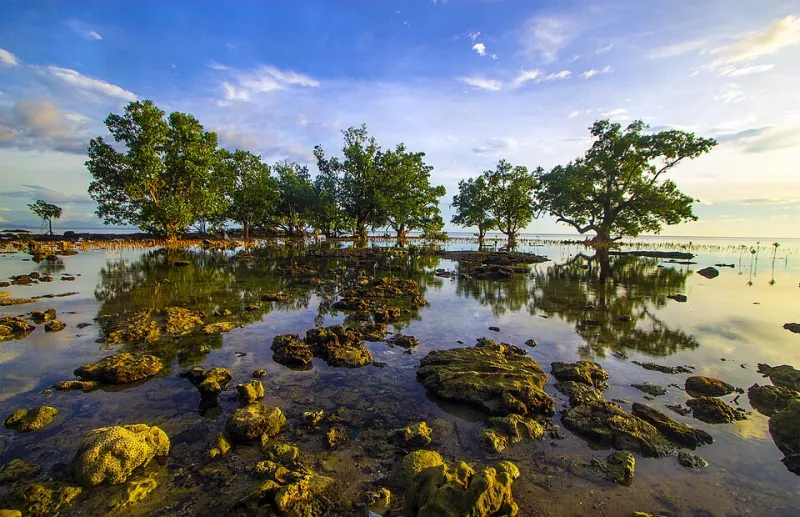
5. Coral Bleaching Observed at the Source
Mass coral bleaching entered mainstream Western environmental reporting as a symbol of climate change largely through imagery from the Great Barrier Reef. But students diving in the Coral Triangle—the planet's marine biodiversity epicenter, centered on Indonesian waters—were documenting bleaching events and reef degradation locally well before those events received sustained coverage in American media.
Because the Coral Triangle hosts greater species diversity than the Caribbean and Red Sea combined, those early student observations carried implications for global marine conservation that took years to register abroad.
The Pattern, and the Lesson
None of this suggests Indonesian students possessed secret knowledge. It suggests something more uncomfortable: the global scientific attention economy rewards publication venue and language far more than proximity to the evidence. Researchers embedded in the problem see it first. Whether anyone reads them is a separate question.
For American scientists, policymakers, and journalists, the takeaway is practical. Some of the earliest warnings about the century's defining environmental and public health problems came from undergraduates with field access and modest equipment. Widening the circle of who gets read is not a courtesy. It is a methodological upgrade.