The Citation Nobody Expected: Tracing One Undergraduate Paper's Journey From a Jakarta Dorm Room to an American Bibliography
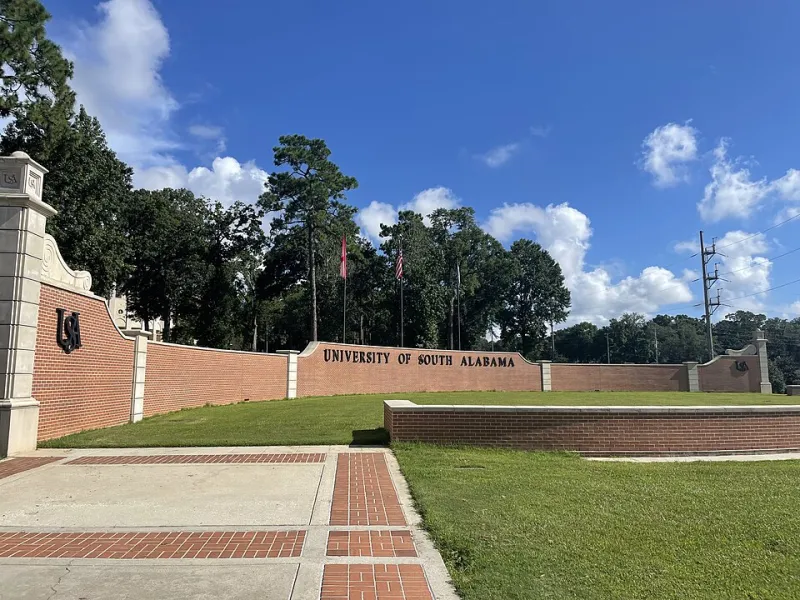
Photo: Tyler Lahti, CC BY-SA 4.0, via Wikimedia Commons
The assignment was unremarkable: a final-year research project, required for graduation, due at the end of the semester. What happened afterward was anything but.
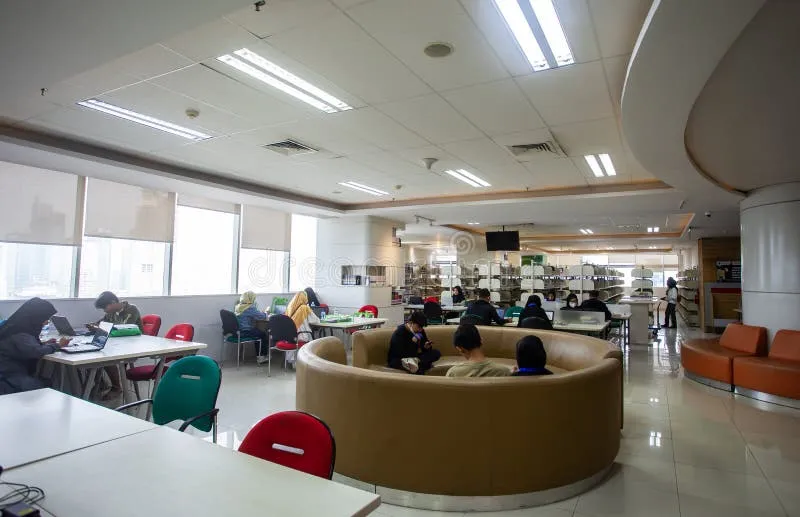
Rani Puspitasari — a pseudonymized composite drawn from interviews with students and faculty at Universitas Indonesia, assembled with the cooperation of her department — wrote her undergraduate thesis on microfinance repayment behavior among informal street vendors in South Jakarta. She wrote it largely at night, on a borrowed laptop, in a dormitory where the wifi dropped out during heavy rain. Her adviser gave the manuscript two weeks of revisions. A national student journal accepted it eight months later.
Then something rarer happened: an American scholar found it.
The Long Road From Assignment to Publication
For most American undergraduates, a senior thesis ends its life in a departmental archive or a campus repository that nobody visits. In Indonesia, the pathway can run differently. Many universities require publication — often in a student-run or faculty-affiliated open-access journal — before a degree is conferred. It is a policy born partly of necessity, partly of ambition: Indonesia produces hundreds of thousands of graduates a year, and publication requirements are one way institutions signal research rigor.
Rani's paper followed that pipeline. First came an internal review by two junior faculty members, who pushed her to strengthen her sampling strategy. Her original dataset covered 60 vendors; after revision, she had structured interviews with 112, collected over six weeks in markets across three districts. Then came language editing — her paper was translated into academic English, a step that costs many Indonesian students real money, often the equivalent of a month's living expenses.
The journal that accepted it publishes quarterly, has no submission fee, and is indexed in Google Scholar but not in the major commercial databases. That indexing gap matters more than most people realize.
How a Citation Actually Happens
The scholar who eventually cited Rani's work — a business professor at a midwestern US university studying informal lending — did not find it through Web of Science or Scopus. She found it through Google Scholar, following a chain of references from a World Bank working paper on microenterprise in Southeast Asia.
"I nearly scrolled past it," the professor told us by email. "The journal wasn't one I recognized. But the abstract was precise, the methodology was sound, and the field data was something my own students could never collect. You can't survey 112 street vendors in Jakarta from Ohio."
The citation appeared in a footnote of her 2023 paper on credit access in informal economies. It is a single line. But for Rani, it rerouted her career: she is now in a master's program, and the citation — a screenshot of which she keeps on her phone — was attached to her graduate applications.
What This Story Reveals About Global Scholarship
There is a structural lesson here for American academia. The research that reaches US journals is filtered through indexing systems, language barriers, and paywalls that were not designed with Jakarta or Yogyakarta in mind. Studies suggest that research from the Global South is systematically underrepresented in high-impact journals — not because the work is weaker, but because the pipelines are narrower.
Open-access student journals, imperfect as they are, have become a workaround. Google Scholar, whatever its flaws, does not care about a journal's prestige ranking. A well-designed study surfaces; a poorly designed one does too, but peer reviewers elsewhere can make that judgment.
Faculty who supervise international students, editors of area-studies journals, and scholars working on development economics would all benefit from treating student-run journals in Southeast Asia as legitimate scouting grounds rather than curiosities.
The Human Ledger
Rani's thesis cost roughly the equivalent of $85 to produce, counting printing, translation help, and transportation to the markets where she interviewed vendors. It has been cited once, downloaded 340 times, and read — she knows because a vendor recognized her — by at least one of her research subjects.
American academia tends to measure scholarship in impact factors and h-indices. This story suggests a different metric: the distance an idea travels from where it was produced to where it is needed. By that measure, an undergraduate paper on Jakarta street vendors has already gone further than most.
The next citation is out there, waiting in a reference list neither author has seen yet.