The Overlooked Archive: What American Academia Misses When It Ignores Indonesian Student Research
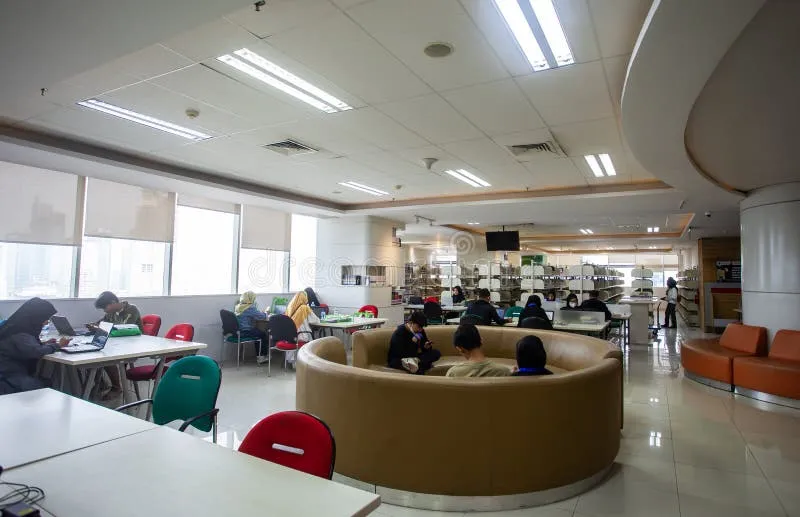
Photo: university students studying in library Indonesia campus, via thumbs.dreamstime.com
Every semester, American graduate students comb through databases hunting for novel dissertation angles, fresh datasets, and understudied populations. Meanwhile, on the other side of the Pacific, millions of Indonesian undergraduates are producing exactly that—research on tropical disease vectors, megacity epidemiology, coral reef resilience, and one of the most seismically active archipelagos on Earth. Very little of it registers on the American academic radar.
That disconnect is not a minor inconvenience. It is a structural blind spot in how US academia understands its own field of view.
The Scale Problem Works in Both Directions
Indonesia enrolls more than nine million university students. Its higher education system spans hundreds of institutions, from established research universities in Yogyakarta and Bandung to regional campuses in Sulawesi and Papua. Student journals—many of them open-access, Indonesian-language publications—publish thousands of papers annually on topics that American researchers routinely flag as "underexplored."
The reasons for the invisibility are mundane and fixable: language barriers, indexing gaps, citation practices that favor English-language outlets, and a quiet assumption that significant research emerges from institutions Western academics already recognize. None of these are problems of quality. They are problems of distribution.
Where the Missed Opportunities Concentrate
Consider three fields where Indonesian student work is not merely relevant but arguably essential reading.
Tropical medicine. Dengue, malaria, and emerging zoonoses remain active research frontiers in the United States, but American students study them largely through modeling and literature review. Indonesian undergraduates in Java and Kalimantan study them through direct observation—fieldwork in transmission zones that US labs can only simulate. A student thesis on dengue incidence patterns in a Jakarta suburb contains ground-truth data that no dataset in a Boston or Baltimore lab can replicate.
Seismology and disaster resilience. The 2004 Indian Ocean tsunami and the 2018 Sulawesi earthquake reshaped global hazard science. Indonesian campuses sit at the epicenter—literally—of this work. Student research on community preparedness, post-quake infrastructure assessment, and early-warning adoption offers case material that American disaster science programs frequently import secondhand, stripped of its original context and authorship.
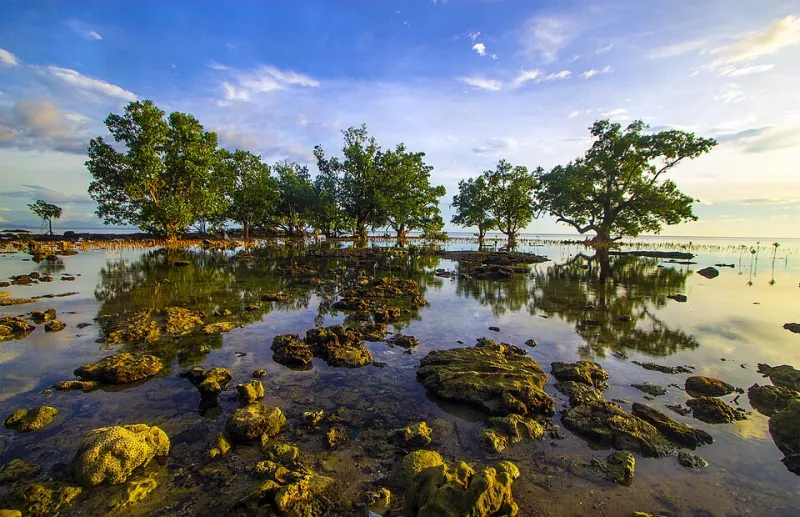
Marine biology. The Coral Triangle, centered on Indonesian waters, holds the highest marine biodiversity on the planet. When US conservation biology courses discuss reef degradation, they are often describing ecosystems documented first by Indonesian students whose names never appear in the syllabus.
What Cross-Border Readership Would Actually Change
Skeptics might argue that student research is, by definition, preliminary. Fair—but the same is true of the conference abstracts and working papers American academia consumes voraciously. The difference is that early-career Indonesian work is read almost exclusively within its own borders, while comparable American work circulates globally from day one.
A few practical shifts could rebalance this:
- Graduate admissions committees scanning international student journals would find applicants with genuine field research experience, not just strong test scores.
- Research librarians at US universities could treat Indonesian student journals as primary sources rather than regional curiosities.
- Journal editors seeking reviewers with direct tropical or seismic expertise would find a deep, underused bench.
The Argument, Stated Plainly
American academia likes to think of itself as a global conversation. A conversation requires listeners. Right now, the flow of attention runs almost entirely one way: Indonesian scholars read American journals; American scholars rarely return the courtesy. Closing that gap would not be charity toward the Global South. It would be self-interest, plainly stated—an inexpensive expansion of the evidence base on which US research already depends.
The archive is there. It is growing every semester. The only question is whether American researchers will bother to open it.