Endurance as Evaluation: What the All-Night Thesis Defense Reveals About How We Judge Scholarship
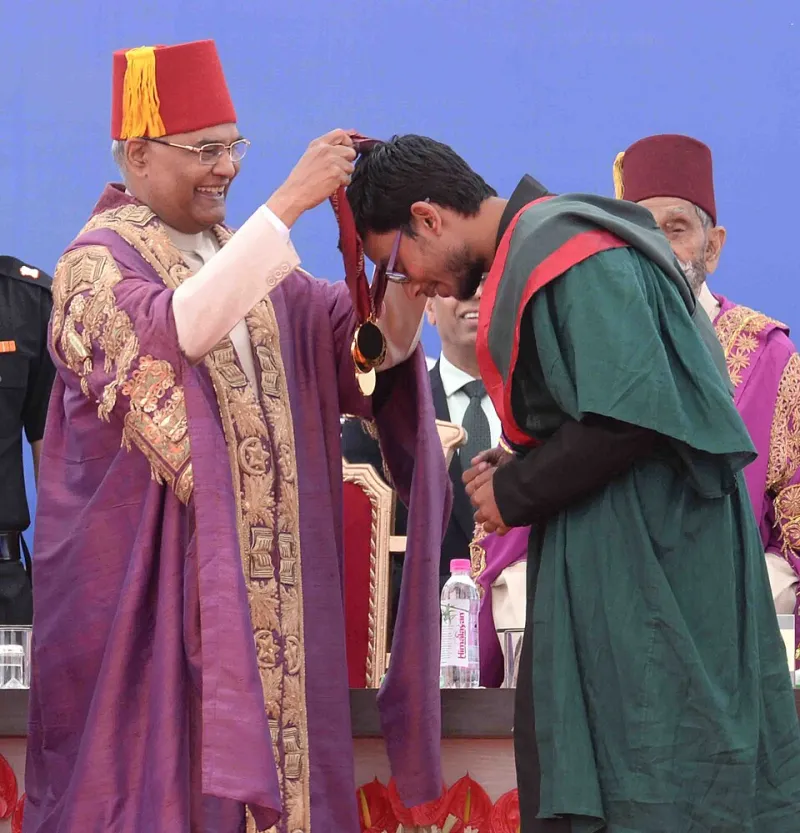
Photo: President's Secretariat, GODL-India, via Wikimedia Commons
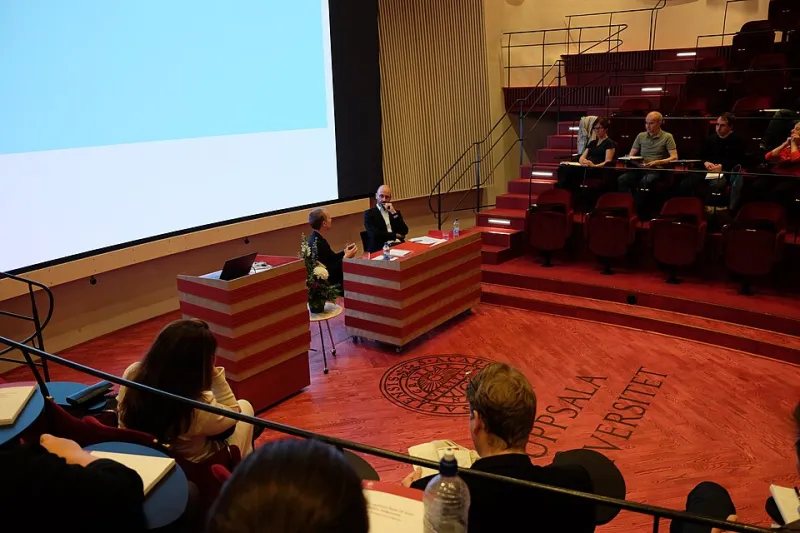
The clock in the seminar room at an Indonesian public university reads 11:40 p.m. The candidate has been answering questions for nearly four hours. Her committee shows no sign of stopping, and neither does she. This is not hazing, and it is not an accident of scheduling. In some programs it is the point.
A Defense Measured in Hours, Not Minutes
Most American graduate students — and nearly all American undergraduates — will never experience anything like the marathon defenses that occasionally surface in Indonesian higher education, sometimes described informally as sidang malam, or night sessions. The typical U.S. thesis or dissertation defense is a carefully choreographed event: a public presentation of fifteen to twenty minutes, followed by committee questions, followed by a reception with cookies. The whole thing rarely exceeds ninety minutes.
Indonesian defenses, where the marathon tradition persists, operate on a different theory of evaluation. The candidate may face hours of questioning that wander from methodology into ethics, into practical application, into the student's personal stake in the research. Faculty on these committees describe the format as a stress test: anyone can sound competent for twenty prepared minutes. Sustaining a coherent intellectual position at hour three, when fatigue has stripped away rehearsed answers, is another matter entirely.
"At midnight, you cannot hide behind your slides," one recent graduate from a university in East Java told Publikasi Mahasiswa. "Everything left is actually yours."
What the Marathon Model Is Testing
Defenders of the extended format argue that it measures qualities the American model cannot see: composure under exhaustion, intellectual stamina, and the ability to hold one's research framework together when questioned from unexpected angles. In cultures where campus traditions often frame the thesis defense as a rite of passage — complete with celebratory rituals afterward — the ordeal itself carries symbolic weight. Surviving it is part of earning the degree.
Critics, including many Indonesian academics, push back hard. Sleep deprivation, they note, is not an academic competency. A candidate who performs poorly at 2 a.m. may simply be a candidate who has been awake for twenty hours. There are equity concerns as well: students with caregiving responsibilities, chronic illness, or limited financial flexibility may be disadvantaged by a format that rewards sheer physical endurance. Several Indonesian universities have formally moved toward daytime, time-limited defenses precisely for these reasons.
The Case Against the Twenty-Minute Defense
Yet American academics familiar with both systems are not unanimous that the U.S. model is the more rigorous one. A twenty-minute defense, some argue, privileges performance over substance. Students rehearse. They anticipate the obvious questions. The format rewards polish, and polish can be manufactured.
"I've sat through American defenses where the candidate never once said 'I don't know,' and I've read Indonesian theses where the student was asked to defend a sampling decision for forty-five minutes straight," says a U.S.-based professor of education who has collaborated with Indonesian universities. "One of those formats tells you more about the actual research. It's not the short one."
There is also the matter of what the defense is for. In the American model, by the time a candidate reaches the defense, the committee has typically already agreed the dissertation is defensible; the event is closer to a public confirmation than a genuine test. The extended Indonesian format, whatever its flaws, preserves the possibility that the committee is still genuinely interrogating the work — that the defense remains a site of evaluation rather than a ceremony.
What Each System Might Borrow
The productive question, scholars on both sides suggest, is not which format is harder but what each one assumes about readiness.
From the marathon tradition, American programs might take the idea that a defense should include sustained, unscripted engagement — longer question periods, questions that follow chains of reasoning rather than a fixed list. From the American model, Indonesian programs have already begun importing time limits, scheduling protections, and clearer criteria, treating candidate welfare as a condition of fair evaluation rather than a competing value.
Some hybrid experiments are already underway. A handful of Indonesian programs now run extended daytime defenses with mandated breaks. A few American doctoral committees have experimented with pre-defense interrogations — informal, hours-long grilling sessions held months before the official event — precisely to recover the evaluative function the polished public defense has lost.
Two Theories of the Finished Scholar
Underneath the scheduling differences sit two different philosophies. The American model asks: Can this person present completed work convincingly? The marathon tradition asks: Can this person hold up as a thinker when nothing is comfortable? Neither question is wrong. A scholar who can do the first but not the second may struggle in a contentious faculty meeting or a hostile conference Q&A. A scholar who can do the second but not the first may never get the work read at all.
For the Indonesian students publishing their research on platforms like this one — often for an international audience encountering their work for the first time — the defense is only the beginning of a longer test. The global academic conversation does not care what time of day a thesis was defended. But the habits formed in that seminar room, at whatever hour, are habits students carry into international collaboration: persistence, composure, and the understanding that good research should be able to survive any question, asked at any time, by anyone.
Even, perhaps, at 3 a.m.