From Fieldwork to Offer Letter: The American Recruiters Reading Indonesian Theses Before Graduation
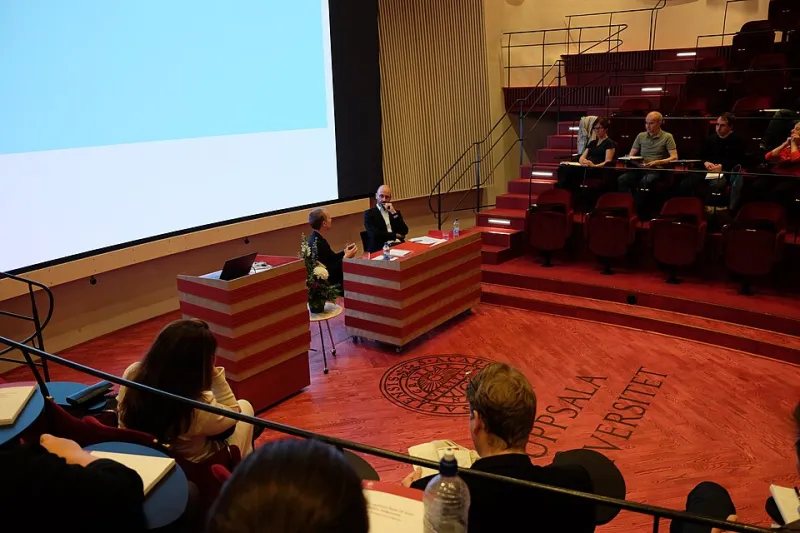
Photo: Johan Jönsson (Julle), CC BY-SA 4.0, via Wikimedia Commons
In most American universities, a thesis defense is an academic formality — a room of professors, a stack of printed pages, and a nervous ninety minutes. In Indonesia, it is increasingly something else entirely: a job interview with an audience of thousands of miles.
Over the past two years, a small but growing number of American employers — tech firms, environmental NGOs, and applied research shops — have begun treating undergraduate theses from Indonesian universities as legitimate hiring credentials. The logic is simple. A completed thesis is a work sample: months of self-directed problem solving, real data collection, and written analysis, produced under resource constraints that would stall many better-funded labs. For recruiters tired of parsing résumé adjectives, it is evidence.
A Portfolio Hidden in a Defense Room
The shift began, as many do, informally. A data science manager at a Boston logistics startup stumbled across a student's GitHub repository while researching open-source Indonesian language models. The repository linked to the student's thesis on low-resource machine translation for Bahasa Indonesia and regional dialects. Within a month, the student — still two semesters from graduating in Surabaya — was consulting remotely.
That pattern has since repeated across disciplines. What unites these hires is not prestige but specificity. American employers are not scouting Indonesian students generally; they are scouting particular problems that happen to be studied intensively on Indonesian campuses.
Coastal erosion is one. Java's northern coast is losing ground at rates that make it a natural laboratory for shoreline dynamics, and undergraduates there produce granular, longitudinal field data that few US programs can match. When a Chesapeake-based restoration nonprofit needed someone who understood sediment movement in tropical tidal systems, it did not post a job listing. It emailed the author of a thesis it had found through an academic indexing service.
Three Graduates, Three Theses, Three Offers
Consider three recent cases that illustrate the pipeline's shape.
The first, a geography graduate from Universitas Gadjah Mada, spent fourteen months mapping erosion along the Demak coastline using a mix of drone imagery and village interviews. Her methodology chapter — candid about the limitations of low-cost drones in humid conditions — impressed a US-based coastal engineering consultancy more, she says, than any polished result could have. She now works remotely on shoreline monitoring projects in Southeast Asia and the Gulf of Mexico.
The second studied supply chain fragility in Indonesian palm oil logistics, tracing how road quality data could predict delivery failures. A procurement analytics firm in Chicago, wrestling with visibility in emerging-market supply chains, hired her before her commencement ceremony. Her thesis, she notes, was essentially the job description written a year early.
The third built a lightweight speech-recognition prototype for Javanese, a language with tens of millions of speakers and almost no commercial NLP support. That work attracted attention from a Seattle AI startup building multilingual voice tools. The thesis defense — streamed on YouTube, as many Indonesian defenses now are — served as an accidental audition. A recruiter watched it live.
Why Theses Beat Résumés
American hiring has long privileged credentials over artifacts. That is changing. The portfolio movement in software engineering, the rise of published research in undergraduate admissions, and the remote-work normalization of global talent pools have all converged on a single insight: finished work communicates better than claimed experience.
An Indonesian thesis also signals something résumés cannot — resourcefulness. Undergraduates at state universities frequently fund their own fieldwork, improvise equipment, and navigate data scarcity. For employers, that constraint-driven creativity reads as a proxy for on-the-job adaptability.
There is a cultural dimension as well. The Indonesian academic tradition of the sidang — a public, semi-formal defense — produces graduates practiced at defending their reasoning under questioning. Several of the hires described here credited the defense itself as the moment they convinced their future employers.
Friction Points in the Pipeline
The pipeline is real but narrow. Language remains a barrier: most theses are written in Bahasa Indonesia, and few American recruiters read them. Discovery is another problem. Unlike US universities, which feed institutional research into indexed repositories, much Indonesian undergraduate work lives on campus servers or personal blogs.
Platforms like Publikasi Mahasiswa exist partly to close that gap — translating, indexing, and surfacing student research to a global audience. As more theses become searchable, the informal recruiter-to-dorm-room channel could formalize into something resembling international campus recruiting, decades after that practice matured in the United States.
The graduates profiled here offer a prediction rather than a promise: that the next generation of Indonesian researchers will not wait to be discovered through conferences or graduate admissions. Their defense rooms, streamed and archived, are already open to the world. Some American employers have simply started watching.
For US organizations, the lesson is procedural: the talent pipeline no longer runs exclusively through domestic campuses. For Indonesian students, the message is sharper still. Write the thesis as if the whole world might read it — because increasingly, it does.