Before the Editors See It: Inside Indonesia's Student-Run Peer Review Circles
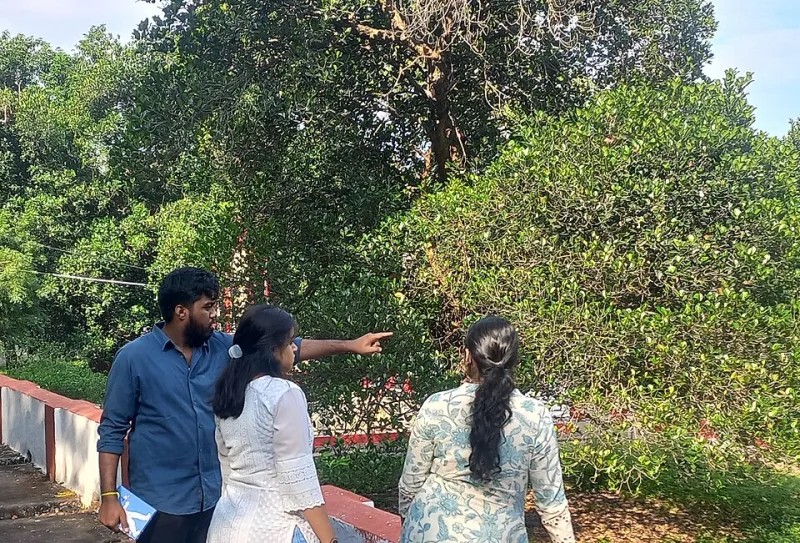
Photo: Adityamadhav83, CC BY 4.0, via Wikimedia Commons
The manuscript arrived in Yogyakarta on a Tuesday, printed double-sided because toner was expensive. Its author, a fifth-semester statistics student at a public university, had spent four months analyzing rainfall variability and smallholder crop yields. Before she could submit it to a journal indexed in Scopus, it had to survive something most American undergraduates never encounter: a formal critique session run entirely by her classmates.
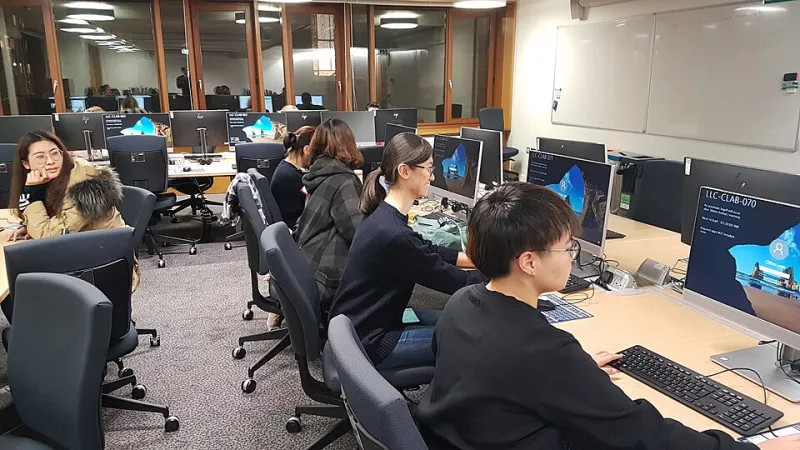
These gatherings — known informally on many Indonesian campuses as kelompok review or review circles — have become an unadvertised but increasingly consequential layer of quality control. Long before an editor at a US-based journal opens the submission, a room of twenty-somethings in Central Java or West Sumatra has already torn the paper apart, argued over its methods, and forced its author to defend every regression table.
A Gatekeeping Layer That Doesn't Appear on the Title Page
The mechanics are straightforward. A student submits a near-final draft to the circle, which meets weekly or biweekly. Two designated readers prepare written comments in advance, in the manner of formal reviewers. Everyone else participates ad hoc. The author responds in real time, then returns with a revision. There is no credit, no line on a CV, no compensation — only the expectation that if you submit work to the circle, you will eventually sit on the other side of the table.
What distinguishes these sessions from a typical writing workshop is their rigor. Because Indonesian undergraduate theses and research papers are frequently aimed at international publication, the circles model themselves on the review standards of indexed journals, not on classroom feedback. Readers are expected to check statistical assumptions, probe literature coverage, and flag overclaims. On some campuses, faculty advisors attend but are asked to stay silent until the students have finished.
"The advisor's voice dominates the room if you let it," one graduate student who facilitates a circle at an Indonesian university explained. "We want the critique to come from peers, because that's what the journal will do anyway. Better to fail here than fail there."
Tracing One Paper Through the Process
The rainfall paper mentioned above offers a useful case study. Its first presentation to the circle lasted nearly two hours. Readers challenged the student's use of a particular imputation technique for missing weather-station data, questioned whether her sampling frame adequately represented eastern districts of the study region, and noted that two of her key citations came from predatory outlets — a problem she had not known how to detect.
She returned three weeks later with a revised draft. The imputation method had been replaced; the sampling limitations were now stated explicitly in a paragraph she later said was the hardest thing she had ever written; the problematic citations were swapped for sources from established publishers. When the paper was eventually submitted to a peer-reviewed international journal, the external reviewers requested only minor revisions.
Her experience is not unusual. Facilitators at several circles report that papers surviving two or three rounds of internal review tend to move through external peer review faster and with fewer desk rejections. The internal process, in effect, functions as a rehearsal for the real thing — with the advantage that classmates can be blunt in ways anonymous reviewers rarely are.
Why American Editors Are Paying Attention
For editors at US-based journals, particularly those in applied fields such as agriculture, public health, and environmental science, submissions from Indonesian undergraduates have historically faced skepticism. Language issues, uneven methodological training, and thin institutional support contributed to high desk-rejection rates, and those rejections reinforced a cycle in which students had little incentive to submit at all.
Review circles complicate that picture. When a manuscript arrives bearing the imprint of a rigorous internal vetting process — even one invisible to the editor — its chances improve dramatically. A few journal editors who work with Southeast Asian submissions have begun asking authors, informally, whether their work was reviewed at their home institution before submission. Some university consortia in Indonesia now advertise circle participation in their internationalization reports.
The implications for American academia run deeper than acceptance rates. Review circles represent an exportable model of quality assurance that requires almost no funding. In the United States, where undergraduate research is often celebrated but rarely subjected to pre-submission critique of this intensity, the Indonesian practice suggests a low-cost answer to a familiar complaint: that student work, however promising, too often stops at the classroom door.
The Limits of the Model
Honest participants acknowledge the circles' weaknesses. Peer review among classmates can drift toward politeness, especially in cultures where direct criticism of a colleague's work carries social weight. Circles with strong facilitators counteract this by assigning devil's-advocate roles; circles without them sometimes produce reviews that flatter rather than improve. There is also a capacity problem — the most active circles tend to cluster at a handful of well-resourced universities, leaving students elsewhere without access.
And the model cannot substitute for what it precedes. External peer review, with its independence and disciplinary reach, remains irreplaceable. What the circles provide is preparation: authors who arrive at submission having already survived the hardest questions their immediate community could pose.
A Quiet Export Worth Studying
For American readers of higher education research, the phenomenon merits attention on its own terms. Here is a system in which undergraduates voluntarily perform the labor of quality control, without credit, and in doing so raise the international competitiveness of their peers' work. It inverts several assumptions baked into the American undergraduate research experience — that feedback flows from faculty downward, that peer critique is informal by nature, and that publication readiness is a graduate-level concern.
The student in Yogyakarta, for her part, has joined the circle as a reader this semester. Her first assigned manuscript arrived last week. She printed it double-sided and started making notes in the margins the same evening.