Lost in Translation, Found in Print: Indonesian Undergraduates and the English-Only Gatekeepers of Global Science
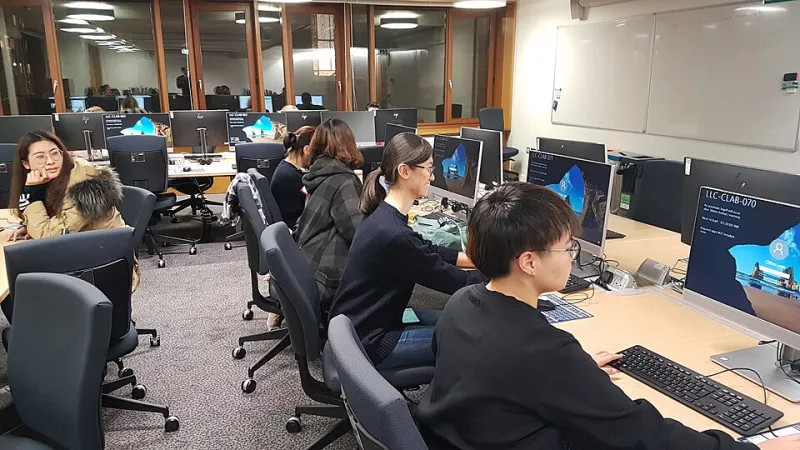
Photo: Stinglehammer, CC BY-SA 4.0, via Wikimedia Commons
The manuscript sat in Rania's Google Drive for eleven months before anyone outside her department read it. Written in Indonesian, her sociolinguistics study of code-switching among street vendors in Yogyakarta had earned high marks from her adviser at Universitas Gadjah Mada. But when she submitted an English version to an American applied-linguistics journal, the rejection came back in nine days. The reviewer's note was polite and devastating: the analysis felt "preliminary."
It was the same analysis. Only the language had changed.
The Invisible Filter
For thousands of Indonesian undergraduates, translation is not an afterthought — it is the gate. English-language journals dominate the citation indexes that American hiring committees, tenure boards, and grant reviewers rely on. A study published in Bahasa Indonesia, no matter how rigorous, exists largely outside that ecosystem. So students translate, and in translating, they make choices no style guide anticipates.
Rania's second attempt tells the story. Working with a campus writing center and a freelance editor in Surabaya, she rebuilt her paper sentence by sentence. Terms like ngoko and krama — the Javanese speech registers at the heart of her argument — had no clean English equivalents. Her first draft had flattened them into "informal" and "formal speech," a simplification that gutted the theoretical framework. The revision kept the original terms, added a glossary, and leaned on analogy for American readers: the difference, roughly, between addressing a judge and texting a friend.
The paper was accepted eight months later.
What Gets Lost, What Gets Invented
Linguists who study academic translation describe a consistent pattern. Nuance tends to be the first casualty: hedging phrases, ironic distance, and culturally specific humor rarely survive the crossing. But something else happens too — translation can sharpen an argument. Indonesian academic prose, shaped by different rhetorical traditions, often circles a point before landing on it. American journal conventions demand the landing first. Students who internalize that structure frequently report that their revised papers are simply better organized than the originals.
Not everyone celebrates this. Some faculty at UI worry that English-medium publishing is quietly homogenizing scholarship, nudging students away from local audiences — farmers' cooperatives, municipal health offices, village governments — who need the research most. A flood-vulnerability study written for an American hazard journal will not be read by the kelurahan officials who could act on it.
The students caught in between tend to develop pragmatic workarounds: dual publication, popular summaries in Indonesian, conference talks delivered in both languages.
The Economics of Being Read
There is a harder edge to this story. Professional translation and editing can cost hundreds of dollars per manuscript — more than many Indonesian students spend on tuition in a semester. Those with connections to English-fluent mentors, or who studied at international-track high schools, navigate the gate far more easily. The result is a stratification within a generation of researchers, invisible in any byline but obvious in publication records.
Campus initiatives are pushing back. UGM's graduate writing center now pairs undergraduates with doctoral students who have already published internationally. UI runs peer-review workshops that simulate the exact reviewer culture students will face. And a small but growing number of American journals have begun offering structured pre-submission feedback for authors from the Global South — a modest reform, but one that treats language barriers as a systemic problem rather than a personal deficiency.
Whose Research Counts
The deeper question is one American academia is only beginning to ask itself: when a journal requires a particular English register, is it filtering for quality or for familiarity? A reviewer who calls an argument "preliminary" may be responding to the argument. Or may be responding to an article's rhythm falling outside what reads as authoritative.
Rania, now in her final year, is blunt about it. "My data didn't change," she says. "My confidence in the data had to change, because the language demanded it." She has since co-authored a second paper with a student at the University of Wisconsin, and she translates both ways now — pushing her American collaborator to cite the Indonesian-language studies that shaped their framework.
The citation indexes will not notice. The science, gradually, will.