Sixty Seconds to Explain a Thesis: Inside the Rise of Indonesia's Student Science Influencers

Photo: Sahaib, CC BY 4.0, via Wikimedia Commons
The typical American image of a thesis defense involves a windowless seminar room, four exhausted committee members, and a whiteboard covered in equations. In Indonesia, a growing number of undergraduates are adding a second venue: a phone camera, a ring light, and sixty seconds of vertical video.
It sounds like a gimmick until you look at the numbers. A student in Bandung posts a one-minute explainer of her undergraduate research on dengue forecasting and wakes up to 2.3 million views — most of them, the analytics show, from the United States. A fisheries major in Bogor turns his thesis on mangrove restoration into a Reels series and receives an email from a doctoral student at a land-grant university in the Midwest asking to cite his dataset. Something is happening here that neither Indonesian campus administrators nor American science communicators fully anticipated.
The Sixty-Second Defense
The format has a loose grammar. Most videos open with a hook — a statistic, a question, a shot of the fieldwork — then compress the research question, method, and finding into under a minute. Subtitles are standard, and English captions are increasingly non-negotiable for creators with international ambitions.
Rania Puspitasari, a public health undergraduate in Surabaya, describes her first viral video almost apologetically. "I filmed it in my boarding room after my defense," she says. "Sixty seconds on why our stunting data from East Java kept getting misread. I expected my classmates to see it. Instead, a nursing educator in Ohio stitched it and asked her students to watch."
Her experience is not unusual. The American audience for these videos is not passive scrolling; it is often professional curiosity. Graduate students hunting for regional datasets, journalists looking for on-the-ground sources, and professors seeking case studies for global health syllabi all appear in the comment sections of Indonesian student science content.
Three Creators, Three Trajectories
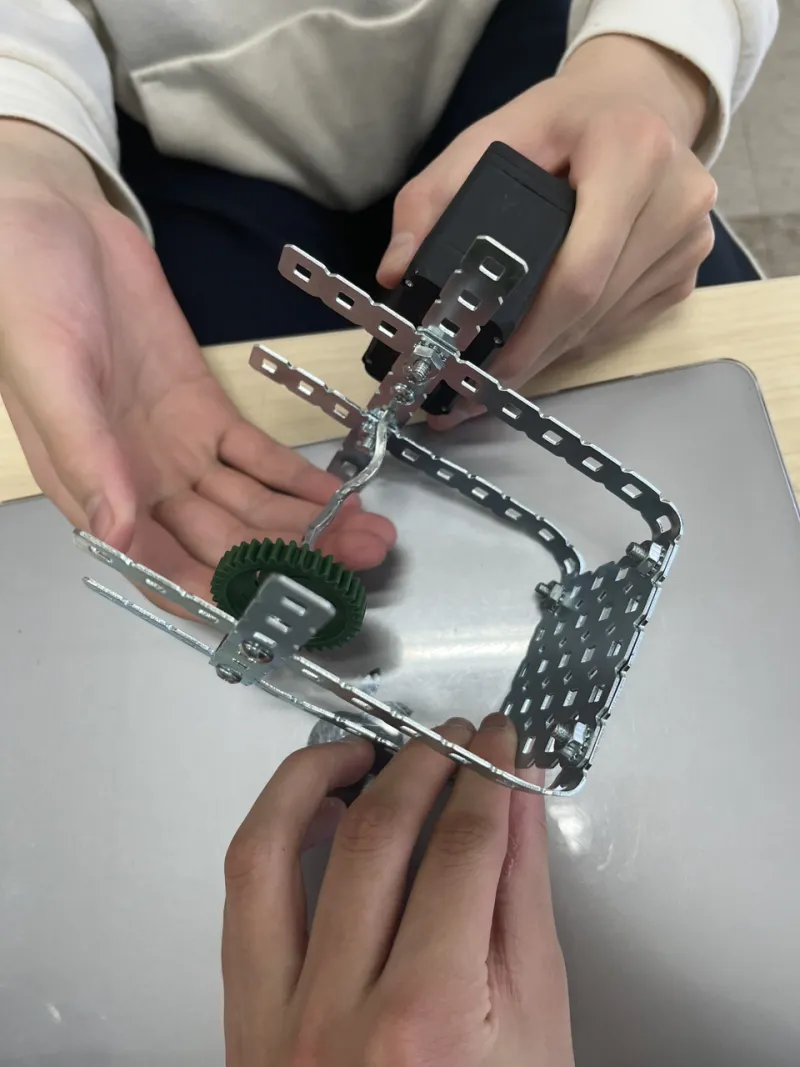
The second creator, an agricultural engineering student named Dimas, took a different route. His short videos on low-cost soil sensors — shot in his family's rice paddy in Central Java — caught the attention of an open-source hardware community in Oregon. The collaboration that followed turned his undergraduate thesis into a co-authored workshop presentation, delivered remotely to an American maker conference. His citation count, once zero, now sits at eleven. For an undergraduate paper in a niche field, that is not nothing.
The third story is more cautionary. A climate student in Yogyakarta went viral for a dramatic video about coastal subsidence and then watched, frustrated, as the nuance of her methodology vanished in the reposts. "People argued about my video, not my data," she notes. Her solution was to pin a link to her full thesis in the bio and to start a second channel for the long version. The short video recruits; the thesis persuades.
Does Virality Move the Citation Needle?
Measuring the academic payoff of short-form video is still early days, but the anecdotal evidence points somewhere interesting. Altmetrics on Indonesian undergraduate papers increasingly show traffic spikes traced to social platforms, and several of the students interviewed reported citation requests arriving within weeks of a video's peak — typically from graduate students in the US, Europe, and Australia rather than established faculty.
The mechanism is not mysterious. American academia's discovery problem is real: relevant research from the Global South often sits behind paywalls, language barriers, or simple obscurity. A sixty-second video functions as an index entry that the algorithm delivers. It does not replace peer review, but it solves the prior problem — being found at all.
There is also a conference argument. Travel to an American academic meeting can cost an Indonesian student several months of living expenses, and visa uncertainty deters many from applying at all. Short-form video, whatever its limits, is a stage that charges nothing at the door. In effect, the feed has become a poster session that never closes.
What American Academia Should Take From This
For US researchers and educators, the trend suggests a few practical shifts. Syllabus builders in global health, environmental science, and development studies now have a searchable trove of primary-source explainers produced by the students doing the work — often with better context than a third-party news write-up. Research groups recruiting international collaborators would do well to treat these creators not as outreach curiosities but as early-career researchers with demonstrated communication skill and, increasingly, real networks.
The deeper question is institutional. Will universities in Indonesia formalize what their students are already doing — counting a viral explainer toward research dissemination metrics, the way some American institutions now count public scholarship? And will American journals adapt their review and submission processes to a generation of researchers whose first audience is a phone camera?
The students, for their part, are not waiting for the committees to decide. The defense is over. The video is up. And somewhere in Ohio, a classroom is watching.